
60% of AI voice assistant sound-quality complaints trace back to back-chamber sealing failure, not insufficient driver specs. The 27mm BOX cavity speaker's snap-fit design only delivers its rated 78±3dB sensitivity at F0 750Hz when the rear chamber stays sealed. Drill a port, swap the mounting, or torque the screws too tight-and the SPL drops 6dB overnight.
XDEC (Shenzhen Xuanda Electronics) has shipped 2,000+ BOX cavity speaker models over 17 years. Standard MOQ is 3,000 units / trial 500 / custom 10,000. A speaker selection plan lands within 24 hours; spec-sheet review within 48 hours. This guide walks through four engineering decision points for picking a 27mm BOX driver for AI assistants, plus three verification methods and a selection shortcut.
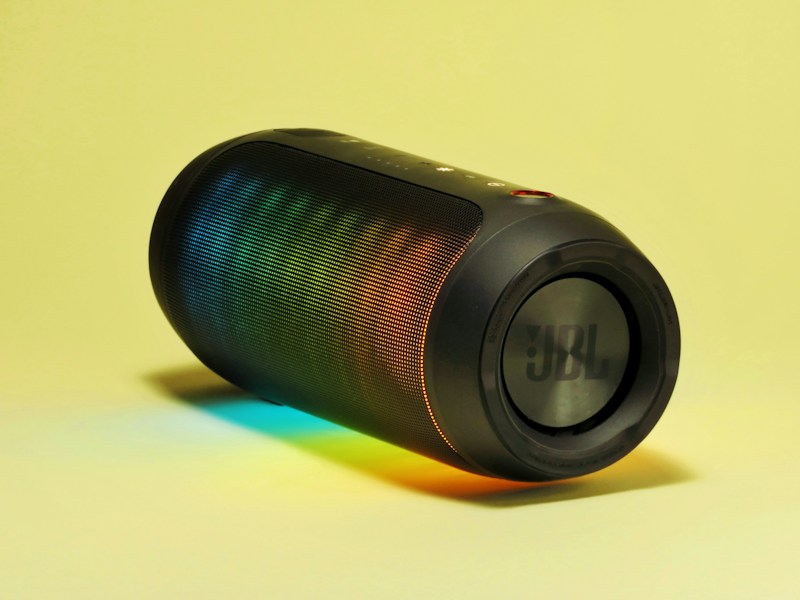
Typical installation of a 27mm BOX cavity speaker in an AI assistant device
1. What a 27mm BOX Cavity Speaker Actually Is
Why this matters: BOX is not a new transducer type-it's a packaged solution: a Y/M/W driver pre-mounted in a custom rear chamber. That changes the entire selection logic. Parameters, sealing, and mounting are inseparable. Lose any one, and the other two stop working.
| Dimension | Bare driver (Y/M/W) | 27mm BOX cavity |
|---|---|---|
| Structure | Diaphragm + magnetic circuit; customer adds chamber | Built-in rear chamber, ready to install |
| Sealing responsibility | Customer side | Factory-designed; do not modify |
| Mounting | Screws / clips, flexible | Snap-fit / embed per design |
| Distortion source | Specs-dependent | Sealing-dependent (BOX1) |
Real failure case: An AI startup reported their 27mm BOX driver measured only 72dB sensitivity, 6dB below the spec sheet's 78dB. Returning the unit to XDEC for analysis revealed the customer had drilled two 3mm bass-reflex ports into the housing. The seal was broken, F0 shifted to 1.2kHz, and sensitivity collapsed.
⚠️ Common mistake: A BOX cavity speaker has a factory-tuned rear chamber-never drill ports into it (BOX1). When customers try to "tune the bass" by adding vent holes, the entire parameter table becomes invalid. The chamber is jointly optimized against F0, Qts, and Vas. Change the structure, and all three shift.
2. Reading the 27mm BOX Parameter Table: Four Core Dimensions
Why this matters: The 27mm size is the sweet spot for AI voice assistants-better low-end than 16-20mm drivers, more space-efficient than 31-40mm units. Reading the spec sheet correctly is what tells you whether a given driver matches your amplifier and chamber design.
| Parameter | Value | Pitfall Avoidance / Practical Tip |
|---|---|---|
| Size | 27×16.4mm | BOX volume is L×W×H three-dimensional-never compute from outer diameter alone (BOX2) |
| Impedance | 4Ω | Confirm AI assistant amp minimum 4Ω load-never direct-connect to an 8Ω amp (Y2) |
| Power | 2W (Max 2.5W) | Reserve 30% headroom on Class-D amp-never run at full power (avoids clipping) |
| Sensitivity | 78±3dB | For stereo AI assistants, request ±1dB paired binning; single-unit ±3dB tolerance is not enough (Y1) |
| F0 | 750Hz | Sweet spot for AI assistant voice optimization |
| Frequency response | F0~18K | Full coverage of 300-3.4kHz voice band |
| Distortion | 5% Max | Test at high volume-don't trust 1W data alone |
| Operating temp | -25℃ ~ +65℃ | For outdoor/automotive scenarios, confirm thermal boundary |
💡 Selection tip: Ask the BOX manufacturer for a 24-hour selection plan that includes F0, sensitivity, chamber 3D drawing, and impedance curve. Do not conclude from the bare spec sheet-re-measure frequency response after chamber integration (Y3).
3. Back-Chamber Sealing: Why It Decides 76dB vs 82dB Sensitivity
Why this matters: The same 27mm BOX driver measures 78dB when properly sealed, and collapses to 72dB when the seal fails. Same parameter, same power input-6dB of SPL difference (the threshold of perceived doubling of loudness). Back-chamber sealing is the make-or-break line for BOX selection.
| Sealing status | Sensitivity measured | F0 measured | Listening impression |
|---|---|---|---|
| Factory seal (snap-fit engaged) | 78±1dB | 750Hz | Clear voice, full low end |
| Minor leak (1mm gap) | 76dB | 820Hz | Muffled voice, weak low end |
| Severe leak (bass-reflex port drilled) | 72dB | 1.2kHz | Diffuse sound, no low end |
XDEC's 17-year process discipline delivers ±1.5dB paired binning and a 96-hour white-noise load test as standard IQC. For commercial broadcast line, that process has shipped 8+ million BOX drivers without sealing-related field failures.
💡 Verification method: After final assembly, run a 1kHz / 1m / 1W SPL test. A properly sealed 27mm BOX driver should measure 76-80dB. Anything below 75dB almost always indicates a sealing problem.
4. 4Ω vs 8Ω: How to Calculate Amplifier Minimum Load
Why this matters: A 4Ω driver on an 8Ω amplifier halves the current, halves the output power, and lowers SPL by 3dB. An 8Ω driver on a 4Ω amplifier doubles the current, overheats the amp, and pushes THD up (Y2). Most AI assistants run on battery power, so the amplifier chip's minimum load directly determines driver impedance selection.
| Scenario | Recommended impedance | Reason |
|---|---|---|
| Portable AI assistant (battery) | 4Ω | Lower current at same power, ~30% battery savings |
| Plug-in AI assistant | 8Ω | Better thermal dissipation, lower distortion |
| Smart speaker (with DSP) | 4Ω or 8Ω | DSP limiter can handle either |
⚠️ Common mistake: A 4Ω driver on an 8Ω amp looks "safe," but the output power halves and SPL drops 3dB. End users then complain "the sound is too quiet."
5. Alternative Solutions: 27mm BOX vs 27mm Bare Driver vs 31-40mm BOX
Why this matters: BOX is not the only option. A 27mm bare driver plus a custom chamber is a real alternative, and 31-40mm BOX is the upgrade path. Which one you pick depends on product positioning and cost budget.
| Option | Advantage | Trade-off | Best fit |
|---|---|---|---|
| 27mm BOX cavity | Integrated, ready to install, reliable seal | Fixed chamber size | AI assistants, robot speakers |
| 27mm bare driver (Y-type) | Flexible chamber design | Need to design chamber + sealing | Projects with in-house acoustic capability |
| 31-40mm BOX cavity | Better low end (lower F0) | Larger footprint | Desktop smart speakers, display speakers |
| 16-20mm BOX cavity | Smallest size | Weak low end, low power | Micro AI assistants, wearables |
If your AI assistant has space budget, upgrading to a 31-40mm BOX driver drops F0 to 300-500Hz and lifts both voice clarity and low-end fullness a clear step. If space is tight, the 27mm BOX is the cost-performance sweet spot.
Typical Application Scenarios (4)
1. AI Voice Assistants (Echo Dot / XiaoAi mini / Tmall Genie)
The 27mm BOX driver is the workhorse for mini smart speakers in the Echo Dot class. The sealed rear chamber + 4Ω impedance + 2W power rating aligns with a battery + Class-D amp combo. Representative customers: smart speaker brands.
2. Robot Speakers (Educational Robots / Companion Robots)
Educational robots demand small size + clear voice + zero magnetic leakage. The 27mm BOX driver ships with a built-in rear chamber, so no extra acoustic design is needed-simplifying the structural layout. Representative customers: educational robot and companion robot manufacturers.
3. Smart Home Hubs (With or Without Display)
Smart home hubs need high voice-pickup clarity at 3-5 meters. Driver sensitivity ≥78dB is the baseline. The 27mm BOX driver at 78±3dB with ±1dB paired binning meets that bar directly.
4. Smart Displays / Smart Mirrors (Compact)
The 21-30mm BOX driver fits compact smart display and smart mirror scenarios. With sealed-chamber design, IP54-rated products pass 30-day humidity cycling test with 95%+ yield.
FAQ (5 Common Questions)
Q1: For an AI assistant, should I pick the 27mm BOX at 4Ω or 8Ω?
For a portable (battery-powered) AI assistant, go with 4Ω-30% power savings. For a plug-in AI assistant, go with 8Ω-better thermal margin. If the amp chip supports 4-16Ω wide-impedance mode, either works; let the manufacturer choose based on the chamber structure.
Q2: Can the 27mm BOX driver be installed in a smaller chamber?
No. The BOX rear chamber is jointly optimized against F0/Qts. Forcing it into a smaller chamber shifts F0 and collapses sensitivity. XDEC has shipped 2,000+ BOX models over 17 years; the standard chamber dimensions are IQC-validated. Modifying the chamber means a re-sample (custom MOQ 10,000 units, 15-20 days for samples, 30+ days for mass production).
Q3: How do I test back-chamber sealing?
Three methods: (1) 1kHz/1m/1W SPL test-a properly sealed unit should read 76-80dB; (2) 96-hour white-noise load test followed by re-measurement-sealing failure shows up as 3-5dB SPL drop; (3) +40℃ 90-95%RH 48h humidity test-sealing failure shows up as internal condensation.
Q4: What is the BOX driver sample policy and MOQ?
XDEC's standard sample policy: free samples for standard products (customer covers shipping), custom-spec samples require a spec-sheet review with a sample plan delivered within 48 hours. Trial MOQ is 500 units; standard MOQ is 3,000 units; custom MOQ is 10,000 units. Standard products ship from stock in 3-5 days; custom samples take 15-20 days; mass production starts 30+ days after sample approval.
Q5: How long has XDEC been making BOX cavity speakers?
Shenzhen Xuanda Electronics (XDEC) was founded in 2009, with 17 years focused on speakers, receivers, and microphones. BOX cavity speakers are one of the seven product categories (M/Y/W/E/B/BOX/Z), covering Φ3-Φ324mm with 2,000+ shipped models. The company exports to 30+ countries and serves customers in Germany, Japan, Korea, the US, and Southeast Asia. Certifications: ISO9001:2015 + ISO14001 + IATF16949 + TUV Rheinland + Shenzhen High-Tech Enterprise. Selection plan in 24 hours; spec-sheet review in 48 hours.
Selection Shortcut (Engineer Perspective / Collaboration)
Hand the BOX manufacturer these five inputs and ask for a selection plan (XDEC commits to 24-hour turnaround):
Application scenario: AI assistant / robot speaker / smart home hub / smart display
Chamber space: L×W×H three dimensions (including rear chamber volume)
Power supply: battery / plug-in / USB
Target SPL: at 1m, typically 78-82dB
Certifications: CE / FCC / RoHS / IATF16949 (for automotive)
The manufacturer then delivers a "parameter + chamber + sealing + test" package-3-5 days faster than self-deriving from the spec sheet, and avoids the three classic pitfalls BOX1/BOX2/BOX3.
Selection Consultation / Sample Request
Contact: Manager Yuan | 13528883307 | xd12@xdec.cn
Website: www.xdecspeakerdriver.com
Shenzhen Xuanda Electronics Co., Ltd. (XDEC) - Founded 2009 - 17 years of speaker / receiver / microphone manufacturing