

XDEC manufacturers take you to know the main parameters of the speaker
Most people know that the speaker has rated impedance, power, frequency characteristics, sensitivity, distortion of these parameters, but the speaker is far more than the front of these parameters, there are many, but we usually do not have a thorough understanding of the following XDEC speaker manufacturers will give you one way!
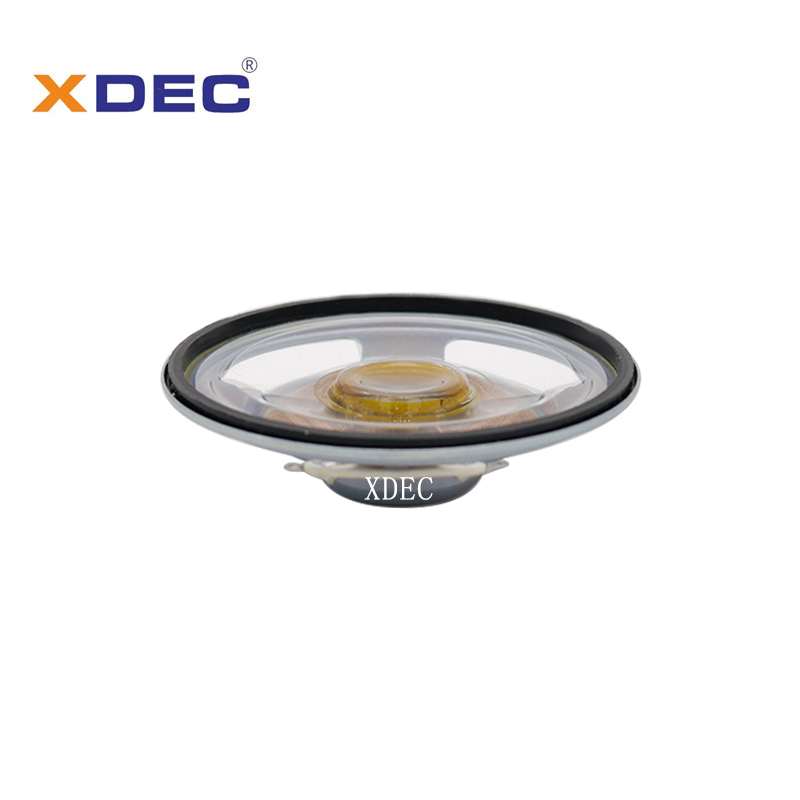
1. power
The power of the speaker is divided into rated power, minimum power, maximum power and instant power, all in W.
Rated power, also known as nominal power, refers to the speaker for a long time normal continuous work without obvious distortion of the input average power.
Minimum power, also known as starting power, refers to the benchmark electric power value that the speaker can be pushed to work.
The maximum power also calls the maximum carrying power, it is the maximum input power that can be borne when the speaker works continuously for a long time.
Instantaneous power is also called instantaneous bearing power, it is to point to the speaker in a short time (10ms) can bear the maximum power, generally 8~30 times of rated power.
2. The rated impedance
The rated impedance of the speaker is also known as the nominal impedance value, which is the minimum impedance of the speaker after the formant peak, including 4Ω, 6 Ω,8 Ω, 16Ωand 32 Ω.
The rated impedance is usually about 1.1 times of the dc resistance of the voice coil.
3. The resonant frequency
Resonant frequency refers to the lowest frequency that the loudspeaker can replay, which is related to the size of the loudspeaker caliber.
The resonance frequency of a woofer generally decreases with the increase of its caliber. The resonance frequency of a 6in (in=0.0254m) woofer is about 50HZ, that of an 8in woofer is about 40HZ, that of a 10in woofer is about 30HZ, and that of a 12in woofer is about 20HZ.
Resonant frequency is an important parameter that determines the low frequency characteristics of loudspeaker. The lower the value is, the better the quality and intensity of the bass replayed by loudspeaker (speaker).
4. Frequency characteristics
The frequency characteristic of the speaker refers to the rule that the output sound pressure on the reference shaft of the speaker changes with the frequency of the input signal when the signal voltage of the input speaker is constant. It is a frequency response curve that changes with frequency (frequency response for short), which reflects the ability of speaker to radiate sound waves of different frequencies.
The frequency response curve of the speaker is irregular continuous curve with many peaks and valleys. The resonant frequency of the speaker is regarded as the low frequency unlimited frequency, and the intersection of the high frequency end of the frequency response curve is regarded as the upper frequency. The frequency range between the lower limit of low frequency and the upper limit of high frequency is called the effective frequency range of speakers by XDEC manufacturers.
The flatter the speaker frequency response curve is, the smaller the frequency distortion is, and the wider the effective frequency range is.
The frequency range of the general woofer is between 20HZ~3kHZ, the frequency range of the mid-range speaker is between 500HZ~5kHZ, and the frequency range of the tweeter is between 2~20kHZ.