

What Are the Differences Between Bookshelf Speakers and Floorstanding Speakers?
Bookshelf speakers and floorstanding speakers differ significantly in design, driver composition, sound performance, and other aspects. Here is a detailed breakdown of their differences:
1. Design & Placement
Bookshelf speakers: Compact in size, they typically consist of a tweeter and a mid-bass driver. They can be placed on bookshelves, desktops, or paired with dedicated speaker stands for optimal sound. Their small footprint makes them suitable for spaces with limited room, such as bedrooms or small living rooms.
Floorstanding speakers: Designed to stand directly on the floor, they have a taller structure-their tweeter height usually aligns with the listener's ear level when seated, ensuring more natural sound projection. Their larger size requires more floor space, making them better suited for spacious areas like large living rooms.
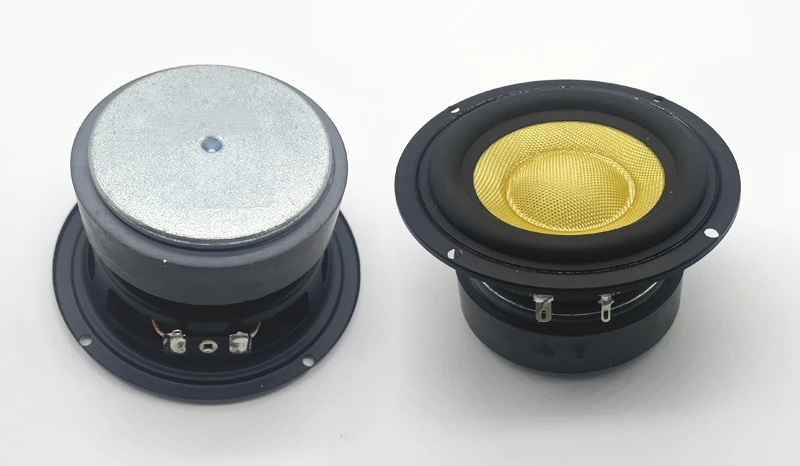
2. Driver Composition & Layout
Bookshelf speakers: Restricted by cabinet volume, most adopt a 2-way driver design (one tweeter + one mid-bass driver). A few high-end models may feature a 3-way design (adding a dedicated midrange driver) or include passive radiators to enhance low-frequency performance, but the overall number of drivers remains limited.
Floorstanding speakers: With a larger front baffle and cabinet volume, their driver layout is more flexible. They often use configurations like "dumbbell-style" symmetry (tweeter centered between two mid-bass drivers) and may include multiple bass drivers (e.g., 2-4 low-frequency units). Some models even integrate large-diameter subwoofers into separate enclosures to boost bass output.
3. Sound Performance
Bookshelf speakers: With fewer drivers and a simpler crossover design, they have more stable impedance variation between the tweeter and mid-bass driver. This results in excellent sound balance and precise soundstage positioning, making them ideal for reproducing vocals, string instruments, and acoustic music-their mid-range clarity and detail are particularly standout.
Floorstanding speakers: Benefiting from their larger size and additional bass drivers, they offer deeper low-frequency extension and more powerful bass impact. Their sound is fuller and more dynamic, excelling at creating a wide soundstage and immersive spatial 感 (spatial presence). They are well-suited for large-scale works like symphonies, rock music, or home theater soundtracks that demand strong dynamic range.
4. Portability & Flexibility
Bookshelf speakers: Lightweight and often detachable from stands, they are easy to move, store, or reposition. Their compact size also means they have higher liquidity in the second-hand market, as they are easier to resell or upgrade.
Floorstanding speakers: Large in dimension and heavy in weight (often weighing 10-30kg or more), they are difficult to move or store. Their bulk also increases storage costs, and they require careful planning of placement to avoid disrupting room layout.
5. Price
Bookshelf speakers: Lower production costs-due to smaller cabinets, fewer drivers, and simpler components-mean they are generally more affordable. For products of the same brand and tier, bookshelf speakers are usually 30%-50% cheaper than floorstanding speakers.

Floorstanding speakers: Higher costs from larger enclosures, more drivers, and more complex crossover systems lead to a higher price point. High-end floorstanding models, especially those with advanced bass technologies or premium materials, can be significantly more expensive.