

How to Choose a Full-Range Waterproof Speaker Suitable for Consumer-Grade Small Electronic Devices?
When selecting a full-range waterproof speaker for consumer-grade small electronic devices, the core is to balance waterproof reliability, size adaptability, sound performance, and cost-effectiveness-aligning the speaker's specs with the device's usage scenario, space constraints, and functional needs. Here's a step-by-step guide:
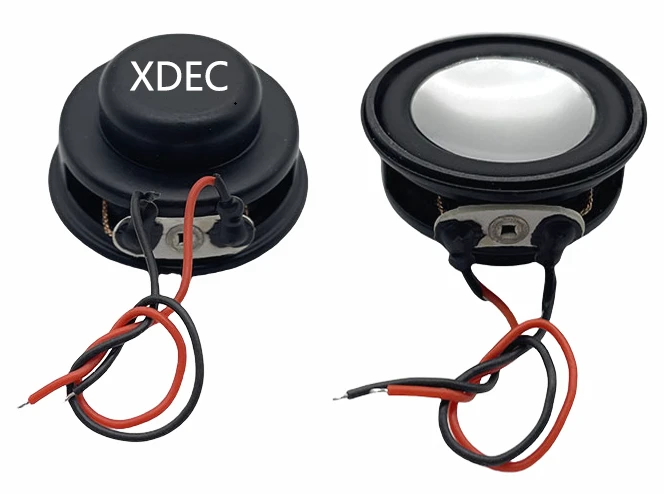
1. Prioritize Waterproof Performance: Focus on IPX Rating and Material Durability
Waterproof capability is the core requirement, so start by confirming two key points:
IPX waterproof rating: Choose based on the device's actual water exposure risk. For example:
Devices used in humid environments (e.g., bathroom radios, electric toothbrushes) need at least IPX5 (resistant to low-pressure water jets, like shower splashes); here is a IPX6 speaker in XDEC
Devices at risk of short-term submersion (e.g., waterproof children's storytellers, swimming pool-side mini speakers) require IPX7 (protected against immersion in 1m deep water for 30 minutes);
Avoid IPX4 or lower (only splash-resistant), as they cannot withstand long-term humidity or accidental spills.
Waterproof material details: Check if critical parts are moisture-resistant-such as a rubber/PU surround (prevents water seepage into the unit), a sealed magnet cavity (avoids rust on internal magnets like neodymium-iron-boron), and a waterproof coating on the lead wires (prevents short circuits from water-soaked wires).
2. Match Size and Installation: Ensure Compatibility with Compact Device Space
Consumer-grade small electronics (e.g., smart bracelets, mini speakers) have limited internal space, so size matching is critical:
Dimensions: Confirm the speaker's diameter (e.g., 32mm, 36mm) and height (e.g., 14.5mm, 18.9mm) fit the device's reserved slot. For ultra-thin devices (e.g., slim smart watches), prioritize ultra-thin models (height ≤15mm) to avoid bulging the device case.
Installation type: Choose based on the device's design-
Most small devices use adhesive mounting (ensure the speaker's edge has a flat surface for secure gluing);
If the device requires detachable maintenance, select models with optional screw-hole mounting panels (note: panels may increase the overall size, so confirm the expanded dimensions in advance).
3. Align Sound Specs with Functional Needs: Avoid Overlooking "Practical Performance"
Full-range speakers for small devices do not need hi-fi-level sound, but key specs should match the device's audio purpose:
Impedance and power: Match the device's audio driver circuit. For example:
Low-power devices (e.g., smart bracelets, electronic scales) suit 4Ω/8Ω impedance and 0.5W-3W rated power (prevents overloading the circuit or draining the battery);
Higher-power devices (e.g., mini outdoor speakers) can use 2Ω/4Ω impedance and 3W-5W rated power (for louder sound output).
Sensitivity and frequency range: Focus on "clear practical sound" rather than extreme specs:
Sensitivity ≥75dB: Ensures the speaker produces audible sound with low input (critical for battery-powered devices, as it saves energy);
Effective frequency range of 200Hz-18kHz: Covers the main frequency of human voice (for prompts, stories) and basic music-avoid speakers with a narrow range (e.g., <300Hz), as they may lack clear low-frequency vocals.
4. Balance Cost and Durability: Avoid "Over-Spec" or "Low-Quality" Traps
Consumer electronics prioritize cost-effectiveness, so avoid two extremes:
Don't overpay for unnecessary specs: For example, a basic electric toothbrush (only needs prompt sounds) does not require an IPX8 rating (for deep submersion) or a high-end neodymium magnet-IPX5 + ferrite magnet models are more cost-effective.
Don't compromise on core durability for low cost: Steer clear of speakers with "shoddy waterproofing" (e.g., no sealed cavity, paper surrounds) or "unstable materials" (e.g., easily rusted iron brackets, brittle plastic caps)-these may fail after 1-2 months of use, increasing repair costs.
Reference batch consistency: For mass-produced devices, choose suppliers that offer sample testing (verify waterproofing, sound, and size consistency across 5-10 samples) to avoid batch defects.
5. Consider Additional Practical Details: Adapt to Device-Specific Scenarios
Tailor the choice to the device's unique usage habits:
For children's devices (e.g., waterproof toys): Prioritize non-toxic, impact-resistant materials (e.g., food-grade plastic caps) and rounded edges (avoids scratches).
For outdoor devices (e.g.,camping mini speakers): Add dustproof protection (preferably IP6X-rated, to resist sand/dust) and a UV-resistant coating (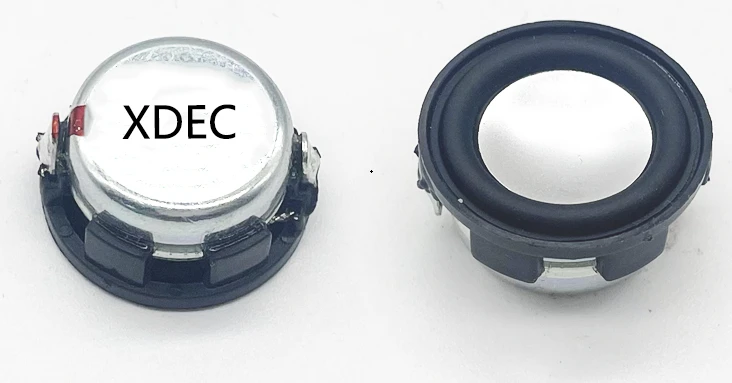 prevents plastic caps from fading or cracking in sunlight).
For battery-powered devices (e.g., portable translators): Choose speakers with low power consumption (e.g., Class D amplifier-compatible models) to extend the device's battery life.