

Detailed Analysis of the Conversion Process from Sound Signal to Electrical Signal
Unveiling How Sound Becomes Electrical Signals: Three Key Technologies-Electromagnetic Induction, Capacitive, and Piezoelectric-Demonstrate Unique Strengths. Different Principles Match Diverse Scenarios, from Professional Recording to Specialized Fields.
1. Fundamental Methods of Converting Sound to Electrical Signals
1.1 ◆ Electromagnetic Induction Conversion
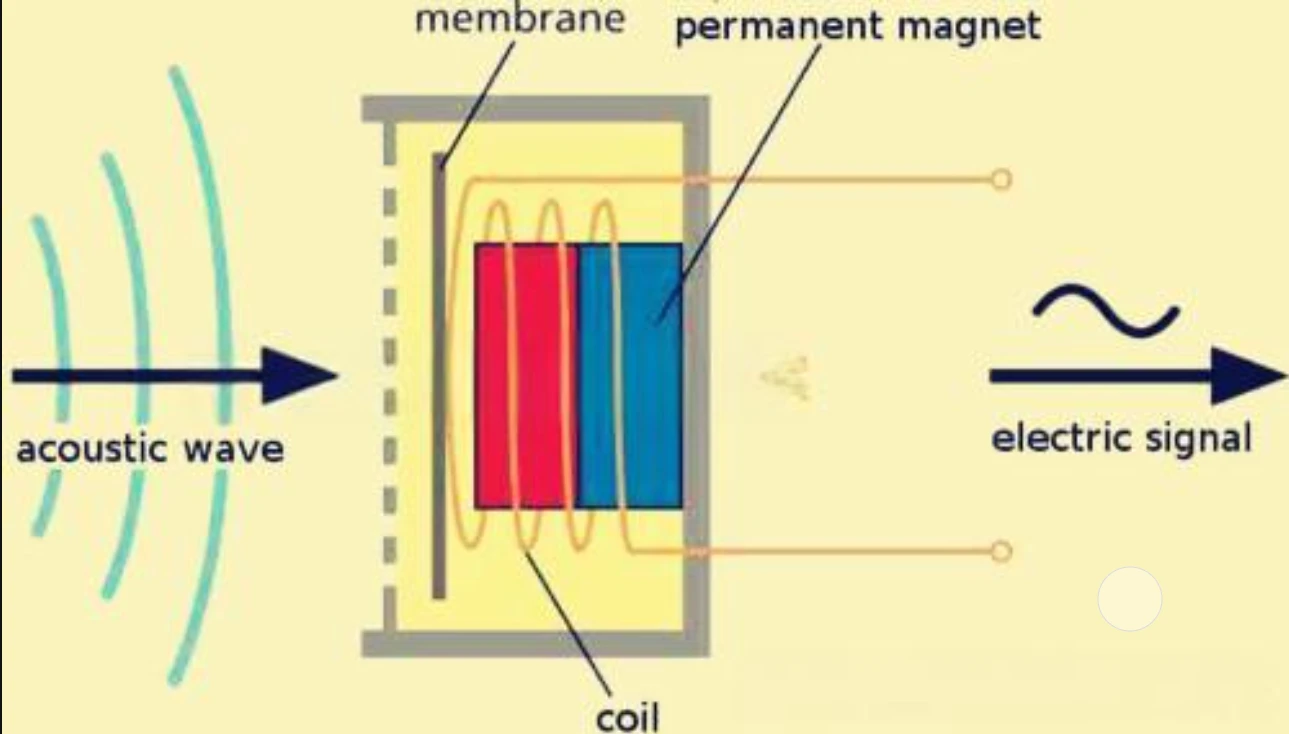
Mechanical vibrations caused by sound induce changes in the magnetic field within electromagnetic induction devices, thereby generating an electrical current. This conversion method was common in early microphones. Its principle is based on Faraday's Law of Electromagnetic Induction: Sound-induced mechanical vibrations alter the magnetic field, producing an electrical current.
this is same as the speaker working theory.
1.2 ◆ Capacitive Conversion
Sound waves cause variations in capacitor plates, which are then converted into voltage or current signals.
Sound vibrations alter the distance between capacitor plates, leading to a change in capacitance. This variation is converted into a voltage or current signal in the circuit, achieving sound-to-electricity conversion. Capacitive microphones are widely used in professional recording due to their high sensitivity and low noise characteristics.
1.3 ◆ Piezoelectric Conversion
Piezoelectric materials generate voltage when subjected to mechanical stress, enabling direct conversion of sound vibrations into electrical signals.
Mechanical stress from sound causes piezoelectric materials to produce voltage. Piezoelectric conversion features rapid response and simple structure, making it widely applicable in audio equipment and sensors.