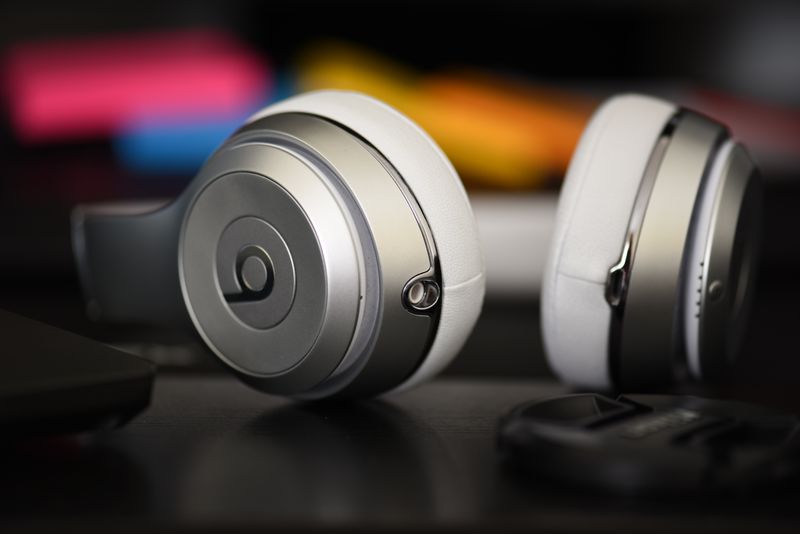
Did you know? Global studio monitor headphone market grew 23% in 2024. Podcast production, audio content creation, and esports streaming are driving demand. But here's the problem: many audio engineers and product managers are making costly mistakes when selecting earphone speaker drivers for studio monitors.
After 17 years in speaker manufacturing, our Shenzhen factory has seen countless cases where companies chose the wrong speaker drivers, resulting in high return rates, poor customer reviews, and brand damage.
In this guide, we'll share the key parameters you MUST evaluate before placing your order.
1. Understanding Monitor Headphone Speaker Drivers vs. Consumer Grade
Many buyers assume monitor headphone speakers are similar to regular earphone speakers. This is a critical mistake:
Flatter Frequency Response: Monitor speakers need flat response within ±3dB deviation. Consumer speakers often have "colored" response for better "feel" but this is unacceptable for professional monitoring
Lower THD Requirements: Total Harmonic Distortion must be ≤0.5% to prevent listening fatigue during long studio sessions
Higher Consistency Standards: Left and right drivers must be matched within 1dB sensitivity and 5% F0 deviation. Mismatched pairs destroy stereo imaging
Standardized Impedance: Professional monitors use 32Ω for compatibility with audio interfaces, mixers, and mobile devices
In short: Monitor headphone speakers are precision instruments, not consumer electronics. Wrong selection = 30% return rate.
2. Six Critical Parameters You Must Check
| Parameter | Minimum Standard | Professional Standard | How to Avoid Pitfalls |
|---|---|---|---|
| Size | Φ30-40mm | Φ36-40mm | 40mm dominates (44% market); smaller = weak bass |
| Impedance | 32Ω±15% | 32Ω±5% | Check source device compatibility |
| Sensitivity | ≥100dB SPL | ≥105dB SPL | High sensitivity ≠ high quality |
| Frequency Response | 20Hz-20kHz | 10Hz-40kHz (Hi-Res) | Check effective response, not极限 response |
| THD Distortion | ≤1% | ≤0.3% | Request actual measurement curves |
| F0 Resonance | ≤300Hz | ≤200Hz | Lower F0 = deeper bass extension |
💡 Selection Tip: Φ40mm is the gold standard for monitor headphones (44% market share). This size offers the best balance between bass extension and enclosure thickness. For entry-level monitors, consider Φ36mm (10-15% cost reduction).
3. Enclosure Design Impact on Speaker Performance
The acoustic enclosure design directly determines whether your speaker drivers perform optimally:
Rear Cavity Volume: Φ40mm drivers need ≥3cc rear cavity. Too small = boosted, harsh bass
Front Cavity Depth: Vented hole to diaphragm distance: 0.5-1mm. Too deep = treble roll-off; too shallow = break-up distortion
Vent Hole Design: Controls front-rear pressure balance. Recommend 5-8% open area ratio
Acoustic Sealing: Left-right channel isolation ≥25dB. Poor sealing ruins stereo imaging
4. Consistency & Mass Production Control
Monitor headphones are typically produced in batches of 500-10,000+ units. Poor consistency leads to:
L-R channel mismatch (≥2dB deviation)
Frequency response variation (customers notice left-right differences)
High warranty claims (especially from batches with wide F0 distribution)
Request these from your speaker supplier:
100% F0 inspection reports
Sensitivity-sorted packaging (within-batch deviation ≤1dB)
THD curve comparison charts
5. Common Questions FAQ
Q1: Why do monitor headphone speakers typically use 32Ω impedance?
A: 32Ω is the industry standard for maximum compatibility. Too low = high current demand = noise floor issues. Too high = requires more amplification power. 32Ω works with computers, audio interfaces, mixers, and mobile devices.
Q2: What are Hi-Res certification requirements for speakers?
A: Hi-Res Audio requires ≥40kHz frequency response. This means using light diaphragm materials (PEN, PEEK) and high magnetic flux magnets. Cost is 20-30% higher, but delivers superior high-frequency resolution.
Q3: How to evaluate a speaker supplier's quality control?
A: Check three indicators: ① Do they provide 100% F0 full inspection? ② Do they use online AOI (Automated Optical Inspection)? ③ Is their batch defect rate ≤1%? If they say "sampling inspection is enough," their QC is weak.
Q4: What's the typical lifespan of monitor headphone speakers?
A: Normal usage lifespan is 5,000-10,000 hours, depending on diaphragm aging and voice coil wear. Choose speakers with cloth/foam surround + composite diaphragm for 30% longer lifespan than pure mylar diaphragms.
Q5: How much does vent hole open area affect sound quality?
A: Significantly. Open area determines enclosure Q-factor and bass characteristics. Test different open areas with free-field measurements during prototyping. Find the optimal open area BEFORE mass production.
Xuanda Electronics · 17 Years in Speaker Driver Manufacturing
ISO9001 Certified | Export to 30+ Countries | Custom Design Capability