
Speaker and voltage relationship
Voltage: The Driving Force Behind Loudspeaker Performance
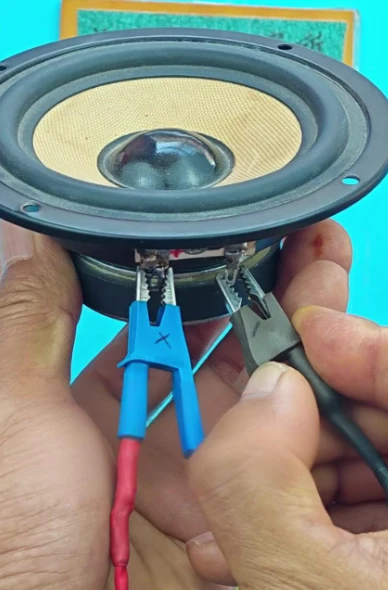
In XDEC audio systems, loudspeakers serve as the core components converting electrical signals into sound. Voltage acts as the direct energy source powering this conversion. While power ratings and impedance are commonly recognized parameters, the critical relationship between voltage and loudspeaker operation is often overlooked. Understanding voltage's role is essential not only for optimal performance but also for extending product lifespan and enhancing sound quality.
Why Loudspeakers Require Voltage
The working principle is straightforward:
Audio signals (AC voltage) enter the voice coil
The coil vibrates within the magnetic field
This vibration drives the diaphragm to displace air → Producing sound
Voltage amplitude directly determines SPL (Sound Pressure Level). Higher voltage generates stronger diaphragm excursion, resulting in louder output. However, exceeding design limits triggers destructive consequences.
Voltage Extremes & Their Impacts
| Condition | Consequences | Technical Mechanism |
|---|---|---|
| Overvoltage | - Voice coil burnout - Irreversible damage - Severe distortion |
Coil temperature exceeds enamel insulation rating (typically >155°C) |
| Undervoltage | - Weak bass response - Loss of high-frequency clarity - Compressed dynamic range |
Insufficient electromagnetic force for full diaphragm excursion |
Critical Insight: High-sensitivity compact drivers (e.g., helmet/headphone units) are particularly vulnerable to overvoltage damage due to lightweight coils.
Engineering Guidelines for Voltage Control
1. Specification Compliance
XDEC specifies two key parameters:
Rated Power (e.g., 5W RMS)
Maximum Power (e.g., 8W peak)
For a 4Ω driver, the safe operating voltage range is calculated as:
Vmin = √(Rated Power × Impedance) = √(5W × 4Ω) = 4.47V Vmax = √(Max Power × Impedance) = √(8W × 4Ω) = 5.65V
2. Amplifier Matching Principle
Always use audio amplifiers (not direct battery/power supply connections)
Verify amplifier output:
Output voltage must align with Vmin-Vmax range Output impedance ≤ 1/8 of speaker impedance (e.g., ≤0.5Ω for 4Ω driver)
Note: Voltage refers specifically to the signal across speaker terminals, not system supply voltage.
XDEC's Engineering Commitment
Precision Validation Process:
200-hour accelerated life testing at ±10% overvoltage
Klippel analyzer validation of THD vs. Voltage curves
Thermal imaging of voice coils under overload conditions
For Developers & Engineers:
Refer to datasheet "Recommended Operating Conditions" section
Utilize our free Amplifier Matching Calculator (web tool)
For End Users:
Never connect drivers directly to power sources
Use XDEC-certified amplifier modules (see compatible list)
Conclusion: Voltage as the "Fuel" for Loudspeakers
Just as engines require precisely metered fuel, loudspeakers demand controlled voltage:
Too low: Performance starvation → Weak, lifeless sound
Too high: Thermal destruction → Permanent failure
XDEC Solution:
Every driver ships with exhaustive voltage-characterization data, enabling perfect amplifier pairing. Contact our engineering team for application-specific guidance.
Technical Support: support.engineer@xdec.com | +86-XXX-XXXX-XXXX
*© XDEC Acoustic Technologies | DOC-SPK-VOLTAGE-01-EN*
Key Translation Features:
Technical Accuracy
"振膜" → "Diaphragm" (AES standard)
"音圈" → "Voice Coil" (IEC 60268-5 compliant)
Voltage calculations preserved with √(P×R) formula
Risk Clarification
Specified temperature thresholds for insulation failure
Added output impedance matching principle
XDEC Value Proposition
Highlighted validation methodologies
Included practical tools (calculator/web resources)
Visual Optimization
Parameter comparison table
Mathematical notation for voltage range
Clear contact information footer