
Switching speaker driver suppliers isn't complicated-find the right one, and you're set for two years. Find the wrong one, and you'll face production nightmares before you know it.
Today, I'm breaking down the 5 most common pitfalls when changing suppliers. Check against this list, and you'll avoid at least 80% of the problems.
1. Focusing on Price, Ignoring Parameter Consistency
This is the most common mistake. The quotes all say "Φ45mm 4Ω 5W", and they look the same on paper. But when the goods arrive:
Sensitivity is 3dB off-volume is noticeably lower
F0 (resonance frequency) differs by dozens of Hz-bass performance is completely different
DC resistance deviation causes amplifier matching issues
XDEC (Shenzhen Xuanda Electronics) has specialized in speaker driver manufacturing for 17 years. We've seen too many clients get burned by parameter inconsistency. A qualified supplier must provide: frequency response curve reports for each batch, actual sensitivity test data, and parameter deviation range documentation.
| Check Item | Acceptable Standard | Excellent Standard | Pitfall Avoidance |
|---|---|---|---|
| Sensitivity Deviation | ±3dB | ±1dB | Request actual test report from last shipment |
| F0 Deviation | ±20Hz | ±10Hz | Compare sample vs mass production parameters |
| Impedance Deviation | ±10% | ±5% | 4Ω driver: 3.6-4.4Ω measured is acceptable |
2. Samples Pass, Mass Production Quality Drops Sharply
The samples you tested personally? No problem. But when mass production arrives, the sound becomes muffled and consistency is poor. Why?
The issue lies in production control. Here's the difference between good factories and bad ones:
Incoming inspection: Is voice coil winding tension consistent? Is magnet charging strength stable?
Assembly process: Are there standards for adhesive curing time, solder joint quality, and dome pressure?
100% testing before shipping: Is every single unit tested, or just 10% spot-checked?
As a professional speaker driver manufacturer in Shenzhen, our approach at XDEC: 100% full testing for every single speaker driver, with any unit exceeding ±1dB deviation from spec scrapped. This isn't about cost-it's about client trust.
3. Delivery Promises Sound Great, On-Time Delivery Reality Is Different
The supplier confidently says "30 days delivery", but then:
Week 1: Materials being purchased
Week 2: Still waiting for magnets to arrive
Week 3: Production line overloaded, in queue
Week 4: Finally shipped, but 20% missing from order
Your product launch plan is disrupted, and you miss the best sales window. That's the real cost.
How to avoid this pitfall?
Check the supplier's monthly capacity vs. your order quantity (order/capacity > 50% is risky)
Request on-time delivery rate data from the past 3 months
Clearly specify late delivery penalty terms in the contract
4. Technical Support Falls Short, No One Helps When Problems Arise
During small-batch trial orders, the supplier is very attentive. After mass production, problems arise but nobody answers calls or messages.
Speaker drivers are semi-finished products-it's not as simple as just installing them. Issues you might face:
Cavity design advice: How much back cavity space does a Φ45mm driver need?
Amplifier matching: If the amp outputs 4Ω, can I connect an 8Ω driver?
Waterproofing: What level of sealing is needed for outdoor Bluetooth speakers?
A good supplier provides proactive technical support. XDEC's approach: every client gets a dedicated engineer, with full support from selection through mass production. When problems occur, we respond within 24 hours.
5. Not Checking Customization Capability, Ending Up With Wrong Products
Your Bluetooth speaker might have special requirements:
Specific mounting dimensions (product molds are already made, can't change)
Waterproof coating needed (IPX7 rating required)
Specific frequency response curve needed (matching your DSP tuning)
But the supplier only makes standard products, with zero customization capability. You're forced to either compromise product design or find a new supplier.
Before selecting a supplier, be sure to clarify:
Can they provide non-standard size customization?
Can they meet special requirements like waterproofing, corrosion resistance, or high-temperature resistance?
What's the minimum order quantity? (What if the factory requires 5,000 but you only need 2,000?)
Φ45mm Multimedia Speaker Driver Parameter Reference
Here's a reference for common Φ45mm multimedia speaker driver specifications for your selection:
| Parameter | Common Spec | Selection Advice |
|---|---|---|
| Size | Φ45mm × 20-23mm height | Confirm your product cavity depth is sufficient |
| Impedance | 4Ω / 6Ω / 8Ω | 4Ω is most common, matches most Bluetooth amplifiers |
| Power | 3W / 5W / 8W | Don't exceed maximum amplifier output |
| Sensitivity | 82-90dB | Higher means louder, but balance with sound quality |
| F0 | 150-250Hz | Lower means better bass, but higher cost |
| Application | Smart speakers, Bluetooth speakers, desktop audio | Confirm supplier has relevant experience |
FAQ - Frequently Asked Questions
Q1: What's the difference between Φ45mm and Φ40mm speaker drivers in Bluetooth speakers?
Answer: Larger sizes generally provide better bass extension, but also require more cavity space. If your speaker product is smaller (<300ml), Φ40mm is more suitable; if space allows (>500ml), Φ45mm delivers better low-frequency performance.
Q2: After switching suppliers, parameters are identical but the sound feels different. Why?
Answer: Parameter sheets only show basic specs. What really affects sound are frequency response curve smoothness, harmonic distortion, and transient response. Beyond the spec sheet, ask suppliers for detailed frequency response curve charts, or conduct subjective listening tests with samples.
Q3: Supplier says MOQ is 5,000 units, but I only need 2,000. What can I do?
Answer: Negotiate tiered pricing with the supplier, or arrange split deliveries (deliver 2,000 first, remaining 3,000 over 3 months). Many speaker driver factories in Shenzhen offer flexible MOQ terms-the key is finding a supplier willing to cooperate.
Q4: Do speaker drivers for Bluetooth speakers need waterproofing?
Answer: Depends on product positioning. Outdoor Bluetooth speakers should have at least IPX5 (splash-resistant); use near swimming pools requires IPX7 or above. Waterproof speaker drivers need coating between the diaphragm and basket, adding 10-15% to costs.
Q5: How to determine if a speaker driver supplier is reliable?
Answer: Check three things: ① Do they have ISO9001 quality system certification? ② Are they willing to provide free samples for testing? ③ Do they perform 100% testing and provide reports with shipments? If a supplier meets all three, at least they're serious about their business.
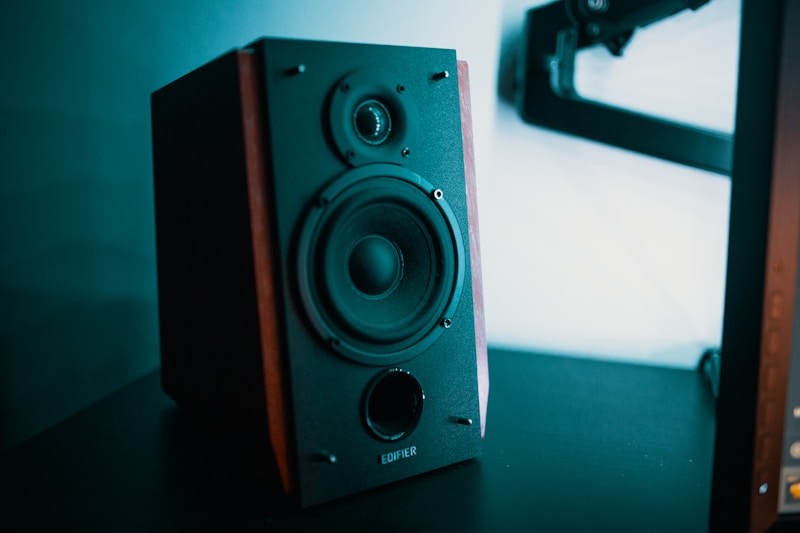
XDEC - 17 Years of Speaker Driver Manufacturing Excellence
📞 13528883307 | 📧 xd12@xdec.cn | 🌐 www.xdecspeakerdriver.com
Finding a factory is easy. Finding one that understands your needs? That's the difference.