

With the growing popularity of smart speakers, touchscreen control panels, and voice-enabled kitchen appliances, user expectations for audio quality have moved far beyond basic functionality. Clear voice interaction and pleasant alert tones rely heavily on the performance of a core component-the speaker. For manufacturers, selecting a speaker that strikes the right balance between size, cost, and performance has become a key factor in product differentiation.
This article explores market trends and analyzes a typical 36mm diameter, 4Ω impedance, 3W rated power speaker solution to explain why it has become a preferred choice for many smart home products.
1. The "Sound Scenario" in Smart Homes and Key Considerations in Speaker Selection
Sound in smart home devices is primarily used for voice interaction and status alerts, which is fundamentally different from high-fidelity music playback. The core considerations for speaker selection can be summarized as follows:
Prioritize Voice Clarity: The speaker must deliver a flat frequency response and low distortion in the 300Hz–4kHz mid-frequency range, where human speech is most prominent.
Compact Size, High Sound Pressure: With limited internal space, the speaker must be highly efficient, producing sufficient volume even at low power inputs.
High Reliability: Devices often operate 24/7 in environments with varying temperature and humidity (e.g., kitchens, bathrooms), requiring long-term stability from the speaker.
Ease of Integration: The terminal type and mounting structure should support automated assembly to ensure production efficiency and consistency.
2. Parameter Analysis: How Does a 36mm Speaker Meet Design Requirements?
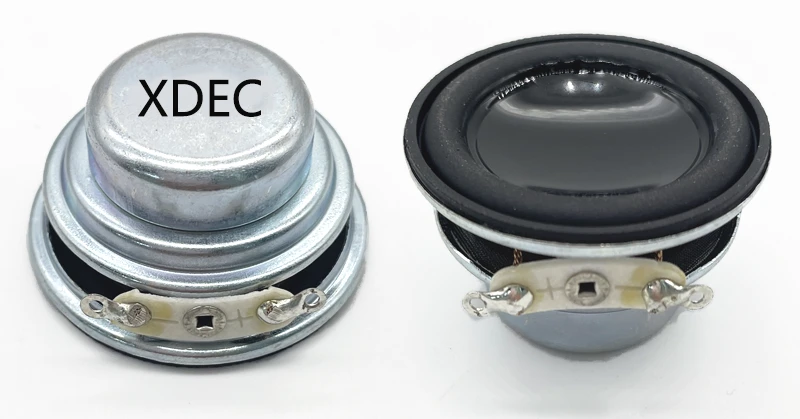
Let's examine how the key parameters of a widely adopted 36mm (4Ω, 3W) speaker address the above needs:
Power and Impedance (3W, 4Ω)
Significance: This is a classic combination that balances output volume and driving complexity. The 4Ω impedance is easy for most built-in audio amplifier chips to drive, while the 3W rated power is adequate for voice interaction and media playback in small to medium-sized rooms.
Sensitivity (83 dB ±3dB)
Significance: This core metric measures electro-acoustic conversion efficiency. This value indicates that the speaker can produce approximately 83 dB sound pressure level at 0.5 meters with 1W input. For battery-powered or low-power devices, higher sensitivity means "less power consumption, louder output."
Frequency Range (F0 – 20kHz) and Resonant Frequency (220Hz ±20%)
Significance: A 20kHz high-frequency上限 ensures crisp and non-piercing alert tones. A resonant frequency around 220Hz ensures solid reproduction of the fundamental frequencies of human speech (particularly male voices), preventing voices from sounding thin or weak.
Distortion (≤10%)
Significance: Maintaining low distortion at typical voice frequencies (e.g., 800Hz) is crucial for ensuring clear, intelligible, and natural-sounding voice assistant responses.
Environmental Reliability
Speakers of this caliber typically undergo 96-hour continuous white noise load tests, -25℃ to +60℃ temperature cycling tests, and humidity resistance tests to meet the stringent reliability demands of smart home appliances.
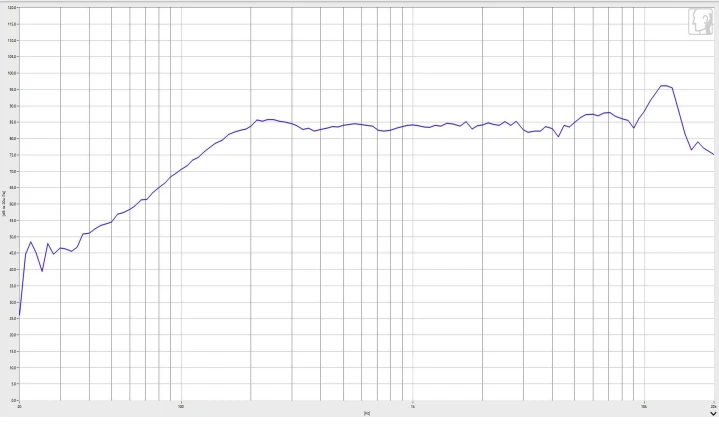
*[Caption: The frequency response curve visually demonstrates the flatness in the mid-frequency range; the impedance curve clearly shows the location of the resonant peak F0.]*
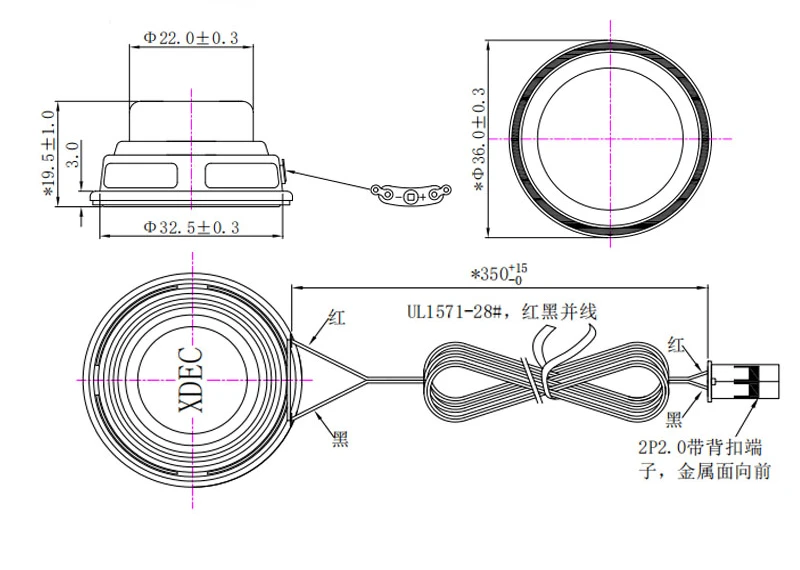
[Caption: The Φ36mm diameter and 19.5mm mounting height provide a compact reference for structural layout.]
3. Beyond Parameters: Why Manufacturers Value "Comprehensive Strength" in the Supply Chain
When selecting critical components like speakers, astute manufacturers look beyond the datasheet to the underlying support systems.
Consistency and Quality Control: Maintaining performance consistency across mass-produced electro-acoustic components is a significant challenge. Choosing suppliers certified with standards like IATF 16949 (a top-tier automotive quality management system) helps ensure parameter stability batch after batch through robust systems and processes.
Collaborative R&D Capability: Established speaker manufacturers can provide complete acoustic test reports and collaborate with clients' hardware and structural engineers to optimize performance for specific enclosures, avoiding scenarios where "specs look good, but performance is poor in the actual product."
Production and Delivery Assurance: The fast-paced smart home market requires a supply chain capable of rapid response and stable delivery.
In China, companies like Shenzhen Xuanda Electronics (XDEC), which have early establishment, independent R&D capabilities, and full-process production lines, are becoming preferred partners for more brand manufacturers due to their comprehensive quality certifications and extensive application history in consumer electronics.
4. Conclusion
As smart home devices evolve from "functional" to "quality-oriented," a well-balanced, reliable speaker forms the physical foundation for a superior voice experience. The 36mm, 4Ω 3W specification, with its proven balance of size, power, and sound quality, remains a market-validated optimal solution. For manufacturers, partnering with electro-acoustic suppliers possessing deep technical expertise and reliable quality systems is a powerful strategy for successful product launches.