
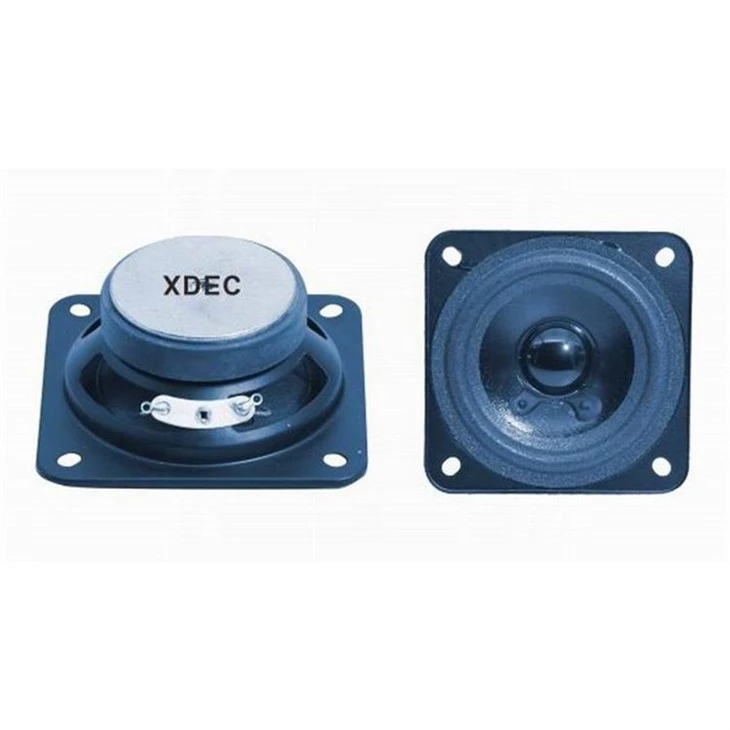
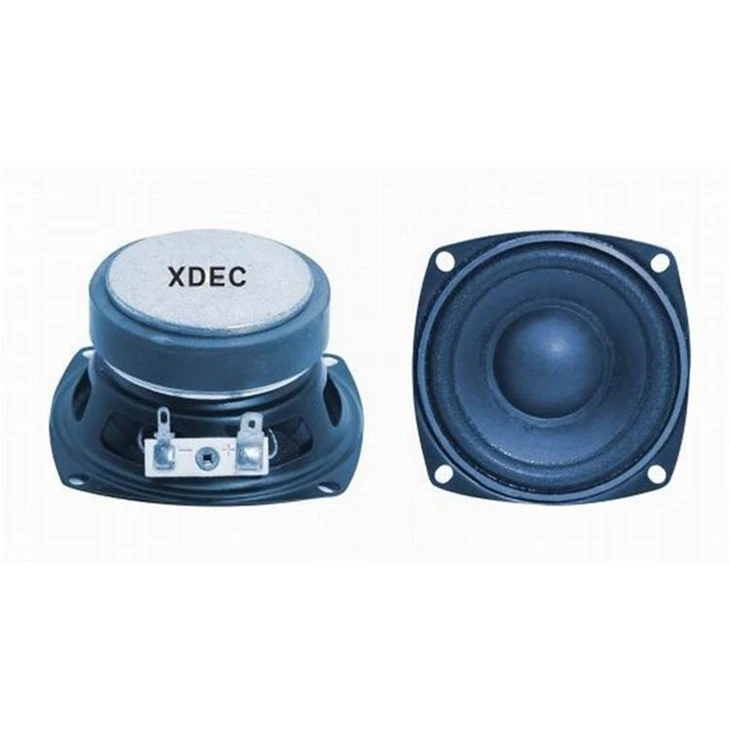
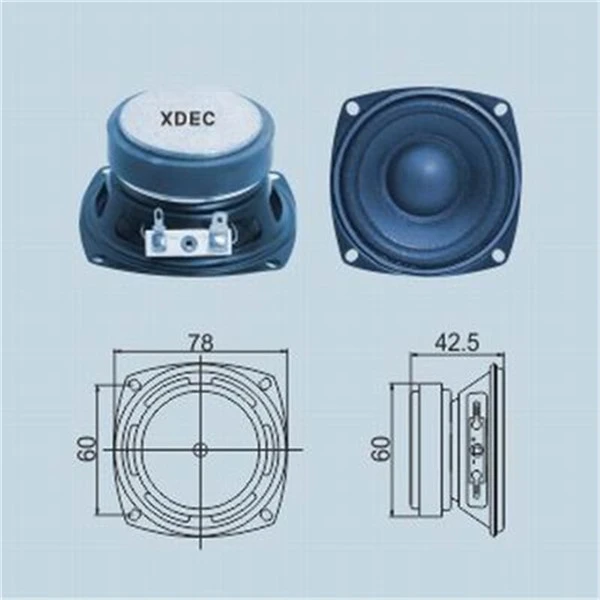
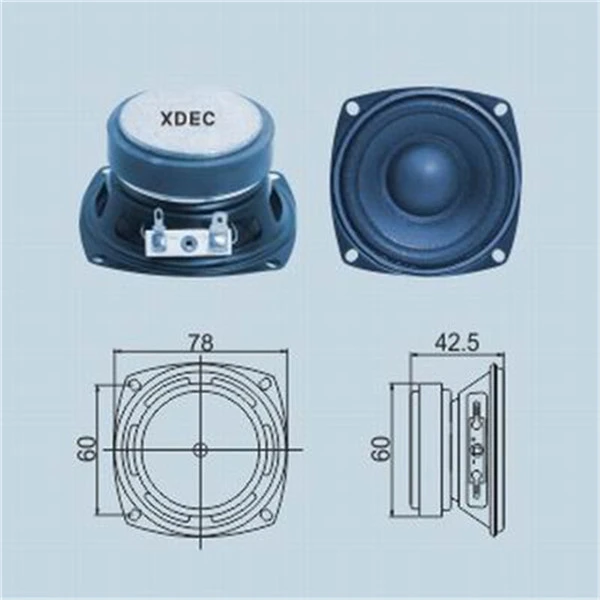
29-45mm-multimedia-speaker-driver
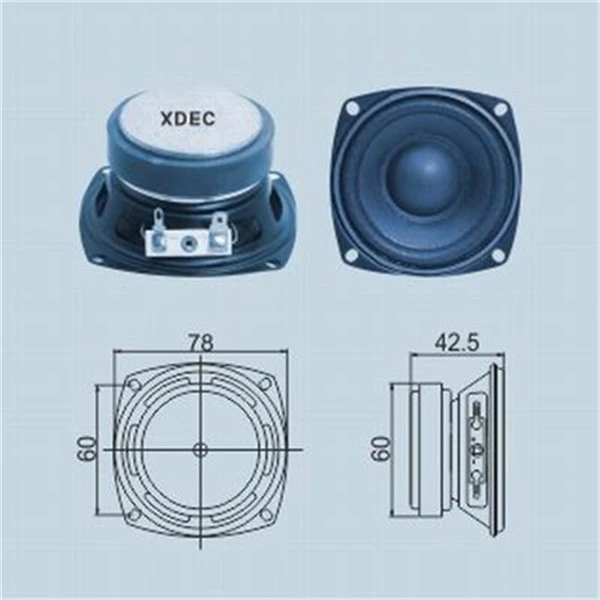
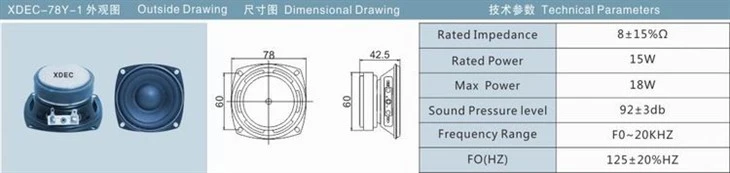
Model No.: XDEC-78Y-1
Part I. Introduction
16-8-22mm-2watt-multimedia-speaker
This is our soundbox product, consisting of a miniature 30mm Mylar Speaker driver and a white plastic housing, with soldering wires for connection. You only need to add a PCB board, and this product can play sound! It saves research time and costs, allowing your new design to come to market more quickly! With dimensions of 34.3*8.8mm, this passive Sound Box speaker has a nominal impedance of 8 ohms, a rated power of 1 watt, and a maximum power of 1.5 watts. Its resonant frequency (F0) is 1700Hz, with a frequency range from F0 to 7K. Distortion is less than or equal to 5%. This soundbox speaker driver has a power output of just 1-1.5 watts, conserving energy, with a sound pressure level (SPL) of about 94. Our soundbox can be used in many sound products, including portable devices, monitoring systems, security systems, fingerprint locks, walkie-talkies, and more.
Application
Smart speakers, smart home applications, car audio systems, mini projectors, advertising players, digital photo frames, teaching tablets, etc.
Components of Multimedia Speaker Driver
Diaphragm:
The diaphragm comprises the cone and the dust cap (dome). It serves as the large movable membrane designed to oscillate back and forth according to the audio signal waveform. As the diaphragm moves forward and backward, it respectively pushes and pulls air, causing compression and rarefaction in the air/medium, thereby propagating sound waves through the air/medium.
Suspension:
The suspension links the diaphragm to the housing/basket of the speaker. It facilitates the proper amount of diaphragm excursion while maintaining the diaphragm and voice coil within their appropriate range of motion. This entails supporting movement along the Z-axis while constraining movement in the X and Y-axes.
Surround:
The surround, also known as the front suspension, is a ring-shaped component that connects the cone/diaphragm to the basket/chassis of the speaker driver. As part of the suspension, the surround aids in controlling cone excursion, regulating the outward and inward movement of the cone/diaphragm.
Spider:
The spider forms the internal part of the speaker suspension. Its primary function is to keep the voice coil in position, allowing movement along the Z-axis while restricting movement in the X and Y axes. Without the spider, there would be a significant risk of the voice coil hitting and/or adhering to the magnet.
Voice Coil:
The voice coil is a tightly wound (typically cylindrical-shaped) coil of conductive wire. It is equipped with a lead wire attached to either end and becomes part of a circuit through which the AC audio signal passes.
Magnetic Structure:
The magnetic structure generates a concentrated permanent magnetic field within the driver, particularly around the voice coil. As a varying magnetic field induced across the voice coil via the AC audio signal, the coil interacts with the permanent magnetic field and oscillates relative to the audio signal waveform.
Magnet:
The main magnet serves as the primary source of the speaker driver's magnetic field (the pole piece simply extends the magnetic poles of the main magnet).
Top Pole Plate:
The top pole plate extends one magnetic pole of the magnet to the exterior of the voice coil. If the top pole plate is too thin, the driver may lose efficiency and experience saturation/distortion, while if it's too thick, the transient response of the speaker may suffer.
Yoke:
The bottom pole plate and upward-reaching pole piece are commonly referred to together as the yoke. This component, situated at the back of the loudspeaker, extends the opposite magnetic pole into the interior of the voice coil.
Basket:
The basket, also known as the chassis or housing, is the stationary physical housing that connects to the magnetic structure at the bottom, the surround at the top, and the spider somewhere in the middle.
Types of Drivers for Multimedia Speakers
Cone Type Drivers:
With conically shaped diaphragms, this is the most commonly used type of driver. Diaphragms, often referred to as cone "paper," have traditionally been made from paper pulp. However, a variety of materials are now available. Besides paper pulp, commonly used materials include PP (polypropylene) and carbon fiber. This structure finds extensive application, covering full-range drivers capable of reproducing the entire audio spectrum, woofers for bass sound reproduction, mid-range drivers for medium frequency ranges, and tweeters for high frequencies.
Dome Type Drivers:
Diaphragms can also be dome-shaped, with sound radiated directly from the domes. The advantage of this type of driver is its excellent directionality. It is commonly used for mid and high frequency reproduction. Many types of dome tweeters offer lower-extending coverage compared to horn-type tweeters, making them suitable components for forming 2-way systems. Dome tweeters can be classified into two categories based on dome materials: soft dome types, which use soft materials such as silk, cotton, or polyester film, and hard dome types, which utilize hard materials such as aluminum or titanium.
Horn Type Drivers:
This type of driver is characterized by a horn attached in front of the diaphragms. Its typical application is the reproduction of mid and high frequency ranges. Acoustically loaded horns provide these drivers with high efficiency and good transiency.
Speaker Driver Materials Used For Manufacture
Aluminium: The majority of metal domes use aluminium diaphragms. Aluminium has an extremely high stiffness-to-weight ratio but poor damping characteristics. Some vendors also chemically treat the metal or apply coatings to improve its damping characteristics.
Titanium: Titanium is slightly heavier than aluminium for an equivalent sized dome. However, it is much stronger than aluminium and has slightly better internal damping. It is also significantly more expensive. As with aluminium, chemical or ceramic surface treatments like "Tioxid" or coatings are sometimes used to enhance damping.
Fabric Treated: Often silk, but other materials are also in common use. Hand-treated fabric is used as the material of choice in some of the most respected tweeters in high-end sound systems. Fabric domes have high internal damping, and their stiffness-to-weight ratio is mostly dependent on the material used to treat the fabric.
Beryllium: Used only in professional drivers, beryllium is the ultimate metal for use in diaphragms. Its stiffness-to-weight ratio is the highest of any known metal. Although its self-damping is not inherently superior, its stiffness usually raises its resonances to well over 50 kHz, obviating the requirement for special surface treatments. Beryllium is also one of the most expensive materials from which to fabricate diaphragms.
Polymide: Polymide is the last of the hard dome materials. It is used in only one recommended driver, a low-cost 3/4" dome tweeter from LPG.
Kevlar: Although Kevlar is most typically used in woven form for larger coned drivers, it still makes two Kevlar dome tweeters.
Ceramic: We produce tweeters using thin aluminum oxide ceramic diaphragms. Used correctly, ceramic can be an almost perfect material. Although it's not as fragile as many assume, fabricating ceramic diaphragms suitable for use in tweeters is quite tricky.
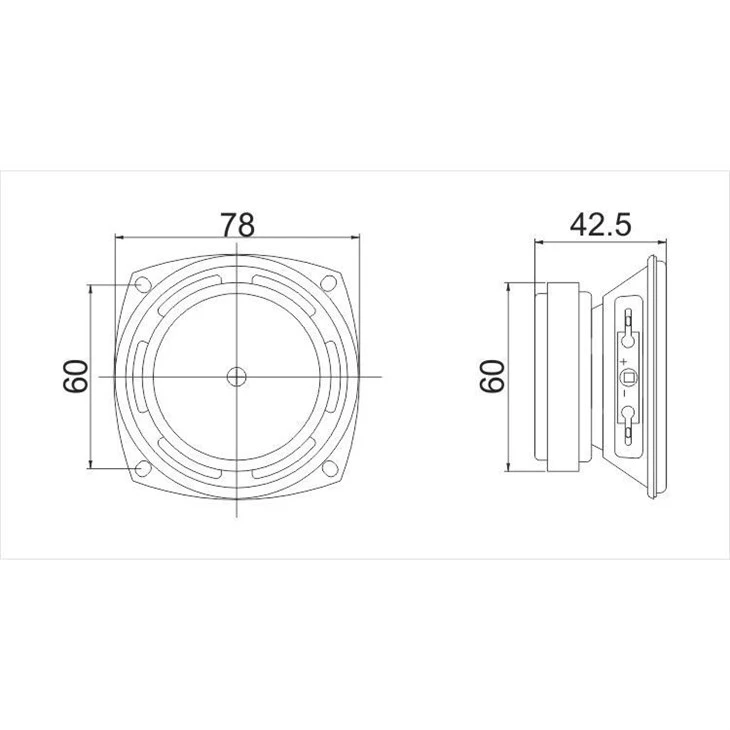
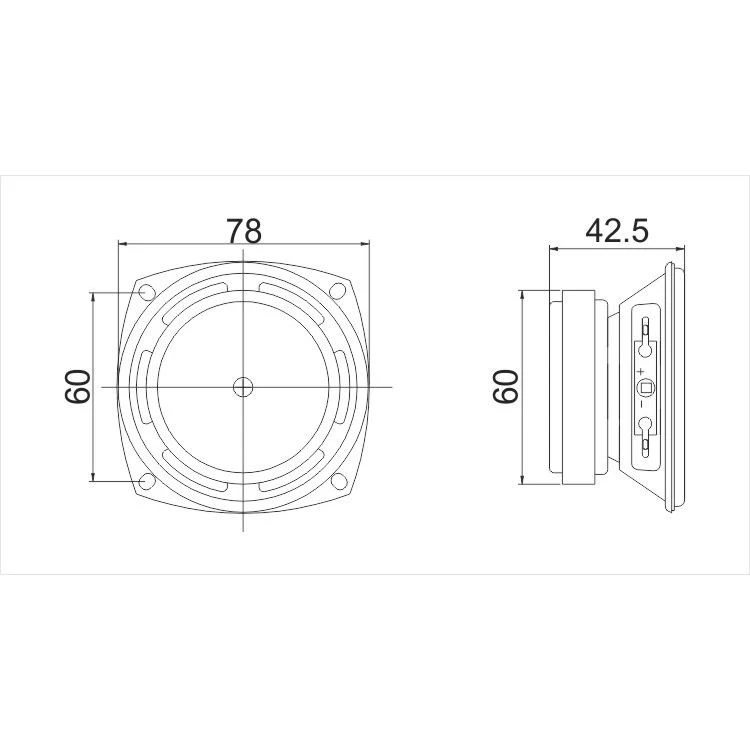
Part II. Dimension
Part III. Technical parameters
|
NO. |
Item |
Specification |
Condition |
|
1 |
Dimensions |
Φ 34.3*8.8Hmm |
|
|
2 |
Nomial Impedance |
8±20% OHM |
DCR 8.2±15%Ω |
|
3 |
Input power |
Rated:1W/ Max:1.5W |
At 2.83V /3.46V |
|
4 |
Resonance Frequency |
1700±20%Hz |
At 0.89V |
|
5 |
S.P.L. |
94±3 dB(0.1W/0.1M) |
At F0-20K Hz (Average) |
|
6 |
Frepuency Range |
F0~7KHZ |
Output S.P.L. -10dB |
|
7 |
Distortion |
5%Max |
At 3.0 KHz 0.1W/0.1M |
|
8 |
Buzze & Rattle |
Not be audible sine wave between at 2.83V /F0~5KHz. |
|
|
9 |
Polarity |
Diaphragm shall move forward. |
|
|
10 |
Load test |
Must be normal after load test:white noise 48 hours. |
|
|
11 |
High TEMP test |
After having been in a test chamber for 48 hours at the condition of +60 ℃ 20~25%R.H and keep 2 hours. |
|
|
12 |
Cold TEMP test |
After having been in a test chamber for 48 hours at the condition of -25℃±3℃ and keep 2 hours. |
|
|
13 |
Humidity test |
After having been in a test chamber for 48 hours at the condition of +40 ℃ 90~95%R.H and keep 4 hours. |
|
|
14 |
Drop test |
The speak shall be dropped 2 times, clause 8 shall be satisfied. |
|
|
15 |
Weld |
terminal weld: 350℃/≤2~3sec*2bit. |
|
|
16 |
Store temp |
Minus 25℃ To +60℃ |
|
All the above parameters can be adjusted or customized according to customer requirements.
Part IV. Our company
Established in 2009 as a well-known domestic electro-acoustic enterprise, Shenzhen Xuanda Electronics Co., Ltd (XDEC) specializes in the research and development, manufacture, and marketing of various speakers, receivers, microphones, and other electro-acoustic products. These products find wide applications in headphones, mobile phones, walkie-talkies, point-and-click pens, learning machines, cordless telephones, laptops, portable DVDs, TVs, navigation devices, building security systems, car audio-visual systems, mini-audio devices, and other consumer electronics products, as well as communication equipment.

2015, successfully passed ISO9001:2008 quality management system
2017, won the Shenzhen high-tech Enterprise Certificate and passed the Rhine TUV certification
2018, passed ISO9001:2015 quality management system and ISO14001:2015 Environmental Management System Certification
2023, obtained IATF16949 automotive industry quality system certification
Located in Shenzhen and adjacent to the Lung Tai Highway and Nanguang Highway, with proximity to the Guangmingcheng Station, XDEC enjoys convenient transportation and a beautiful environment. With over 200 employees, XDEC is considered a reliable partner by many domestic and overseas customers due to its strong R&D capabilities, high-quality products, and excellent service. The company has always prioritized technical innovation as the driving force behind its sustainable development. It provides customers with comprehensive product design and engineering services, ensuring product quality and excellent sound performance from product parts development to product assembly integration.

XDEC adheres to the business philosophy of "Integrity, Quality, Innovation, and Service," rigorously controlling every aspect of production. It places high importance on production equipment, quality, and R&D investment. XDEC vigorously introduces advanced production equipment and independent R&D equipment to meet customer needs, emphasizing independent innovation and excellence. The company is committed to in-depth R&D for more refined electro-acoustic products and is willing to collaborate with partners from all walks of life to create a brilliant future together.

Part V. Some of our partners

Part VI. FAQ
Q1. What is the MOQ?
Q2.Do you support OEM and ODM services?
Q3. What are the payment methods?
Q4. What are the payment terms?
Q5. Can I get some free samples before mass production?
Q6. How long can I get the samples?
Q7. Are more speaker drivers better?
Q8. What is the purpose of the driver in a speaker?
Q9. What is the most common type of speaker driver?
Q10. How do drivers affect sound quality?
Q11. Does speaker driver size matter?
Q12. What is the efficiency of a speaker driver?
Q13. What is power rating on speaker driver?
Q14. What are speaker drivers made of?
Q15. Does driver size affect audio quality?
Q16. How many drivers does a full range speaker have?
Q17. Does speaker size affect loudness?
Q18. How do you pack speaker drivers?

